
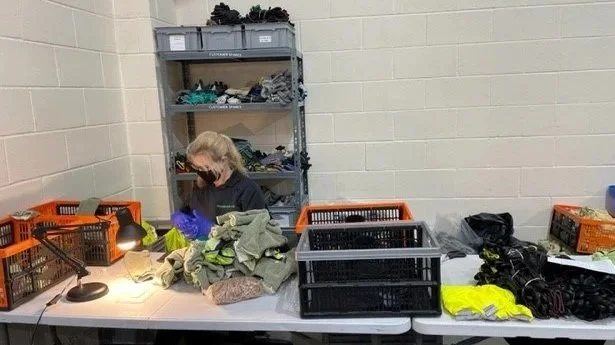
Final checks to laundered items - Stuff4Life the Staysafe Way
For major employers, uniform, workwear and PPE represent a significant recurring cost. Thousands - sometimes hundreds of thousands - of garments are purchased, issued, washed, replaced and ultimately disposed of every year.
The conventional response to reducing the environmental impact of those garments has tended to focus on what happens at the end of their life: can they be recycled?
Stuff4Life believes the bigger economic opportunity starts much earlier.
“For a CFO, circular workwear should not be viewed as a waste management cost. It is an asset-efficiency opportunity. If we can safely keep a £50, £100 or £200 garment in service for longer, repair and refurbish it instead of replacing it, rebrand it instead of disposing of it, and recover its material when it finally reaches end of life, we reduce both the total cost of ownership and carbon. Through Stuff4Life’s partnership with Staysafe, the commercial and environmental arguments point in exactly the same direction.”
Miles Watkins, Stuff4Life founder
The most valuable garment environmentally and financially is often the one you do not need to replace. Extending the working life of uniforms and PPE, increasing reuse and repair, and only recycling when a garment genuinely reaches end of life can reduce procurement costs at the same time as reducing carbon and waste.
That is why Stuff4Life has partnered exclusively with commercial laundry specialist Staysafe, which uses JLA’s OTEX ozone laundry system, bringing professional garment care and disinfection into Stuff4Life’s circular workwear model.
Together, Stuff4Life in partnership with Staysafe can help customers keep garments working harder, for longer.
Laundry as an asset management tool
Stuff4Life's circular workwear model is based on four principles: reuse, repair, rebrand and recycle.
Rather than treating clothing as a consumable - buy, wear, discard, replace - the objective is to manage garments as assets whose useful economic life should be maximised.
Laundry is fundamental to achieving that. It needs to do more than make workwear clean: it should maintain hygiene and protection standards without unnecessarily accelerating deterioration of the textile, colour, reflective materials or other functional characteristics.
Through its exclusive partnership with Staysafe, Stuff4Life can incorporate OTEX ozone laundry technology into this circular service.
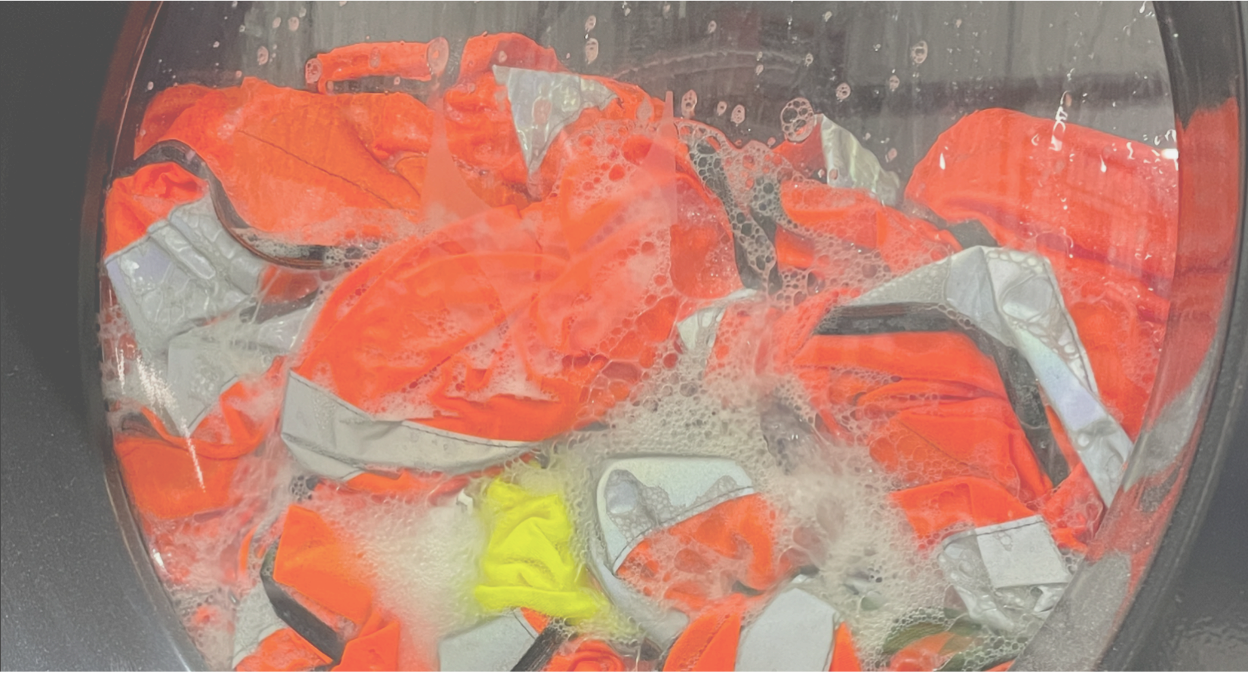
Washing before checking and returning to customers
OTEX uses aqueous ozone to disinfect during the wash rather than relying primarily on the high water temperatures used in conventional thermal disinfection. The technology has been used in the UK since 2004 and has a substantial evidence base in demanding healthcare environments.
A Department of Health/NHS evaluation at Southampton University Hospitals NHS Trust reported that OTEX was effective against microorganisms including hardy C. difficile spores and noted that the system had received the Rapid Review Panel's highest recommendation.
The significance for corporate workwear goes beyond infection control. The NHS evaluation found that OTEX enables textiles to be laundered without damaging high temperatures and with reduced or no chemicals, while clinical and in-vitro trials referenced in the report demonstrated maintenance of textile fibre integrity.
For high-visibility clothing, uniforms and specialist PPE that may undergo dozens of laundry cycles during its working life, reducing unnecessary textile stress can help support a longer service life, subject to garment inspection, applicable standards and manufacturers' care requirements.
Lower operating costs, longer garment life
The Southampton NHS evaluation provides evidence of the potential operational savings and impact reduction from ozone laundering.
Water and energy costs were measured before and after OTEX was introduced. The conventional thermal-disinfection cycle cost £1.18 per wash in water and energy, compared with £0.75 for OTEX. Across 130 cycles a week, the evaluation calculated annual water and energy savings of £2,916.69 - around 36%.
The OTEX process used half the detergent of the thermal wash evaluated, while laboratory testing also found that thermally washed textiles retained around 26% more moisture, potentially increasing subsequent tumble-drying time and energy consumption.
Those figures relate to a specific NHS installation and should not simply be extrapolated to every commercial laundry operation. But they demonstrate an important principle: reducing water, energy and detergent consumption while protecting textile integrity can attack cost at several points in the garment lifecycle.
The bigger prize, though, may be avoided replacement - helping make stuff last longer.
The carbon saving that doesn't appear on the laundry bill
A new piece of workwear carries environmental impacts long before it reaches the employee: raw-material production, polymer or fibre manufacture, dyeing, textile production, garment assembly, packaging and transport.
Keeping an existing garment safely in use avoids or postpones the need to repeat that process.
That is why durability and life extension sit above recycling in a genuinely circular model.
Consider a corporate estate purchasing 100,000 garments a year. Increasing average useful life by even 20% could have significant implications for replacement purchasing. The precise saving depends on garment type, utilisation and loss rates, but the commercial principle is straightforward: reducing replacement volumes simultaneously reduces expenditure and embodied environmental impact.
This is Stuff4Life - the Staysafe Way:
Maintain → Launder → Inspect → Reuse → Repair → Rebrand → Reissue → Recycle
Stuff4Life takes a whole-life approach to workwear, keeping garments in use for as long as safely and practically possible. By bringing laundry, repair, rebranding, reuse and end-of-life recovery together, we help organisations get more value from the garments they already own.
Staysafe brings specialist laundering expertise into that wider model, helping provide a seamless, joined-up service that reduces replacement, cuts waste and extends garment life.
Recycling remains essential, but it should happen when the economic and functional value of the garment itself has genuinely been exhausted.
Preparing for EPR
There is another reason CFOs and procurement teams should take this seriously.
Textiles are moving towards greater producer responsibility. UK and European policy is increasingly focused on durability, reuse, repair, collection and demonstrable management of products at end of life.
While the precise future requirements applying to UK corporate workwear and safety wear are still developing, organisations with large textile footprints can start preparing now.
A managed system that records garments, extends their working lives, facilitates return, captures reuse and repair, and provides a controlled recycling route creates much of the infrastructure and data likely to become increasingly valuable under Extended Producer Responsibility (EPR).
The result is a proposition that combines compliance readiness with cost reduction rather than treating sustainability as an additional expense.
From clothing procurement to clothing productivity
Ultimately, Stuff4Life - the Staysafe Way asks corporate customers to change one question.
Instead of asking: “How cheaply can we buy our next garment?”
Ask: “How much useful service can we obtain from every garment we buy?”
OTEX-enabled laundering can form an important part of that strategy: providing validated disinfection, reducing reliance on damaging temperatures, lowering resource consumption and helping protect garment quality.
Combined with Stuff4Life's reuse, repair, rebrand, recycle model, it turns workwear from a linear purchasing-and-disposal exercise into a circular asset-management system.
Stuff4Life - the Staysafe Way therefore offers CFOs a straightforward proposition:
extract more value from existing assets;
reduce total cost of ownership;
cut carbon and resource consumption; and
prepare the organisation for future EPR obligations.
Making garments last longer isn't simply good environmental practice.
It's good economics. Wear Your Commitment.

Work with us to wear your commitment to people and planet
For more information or to sign up for our newsletter, contact us.